

Small-Dog Scales: What They Are and How to Decide Whether to Buy One
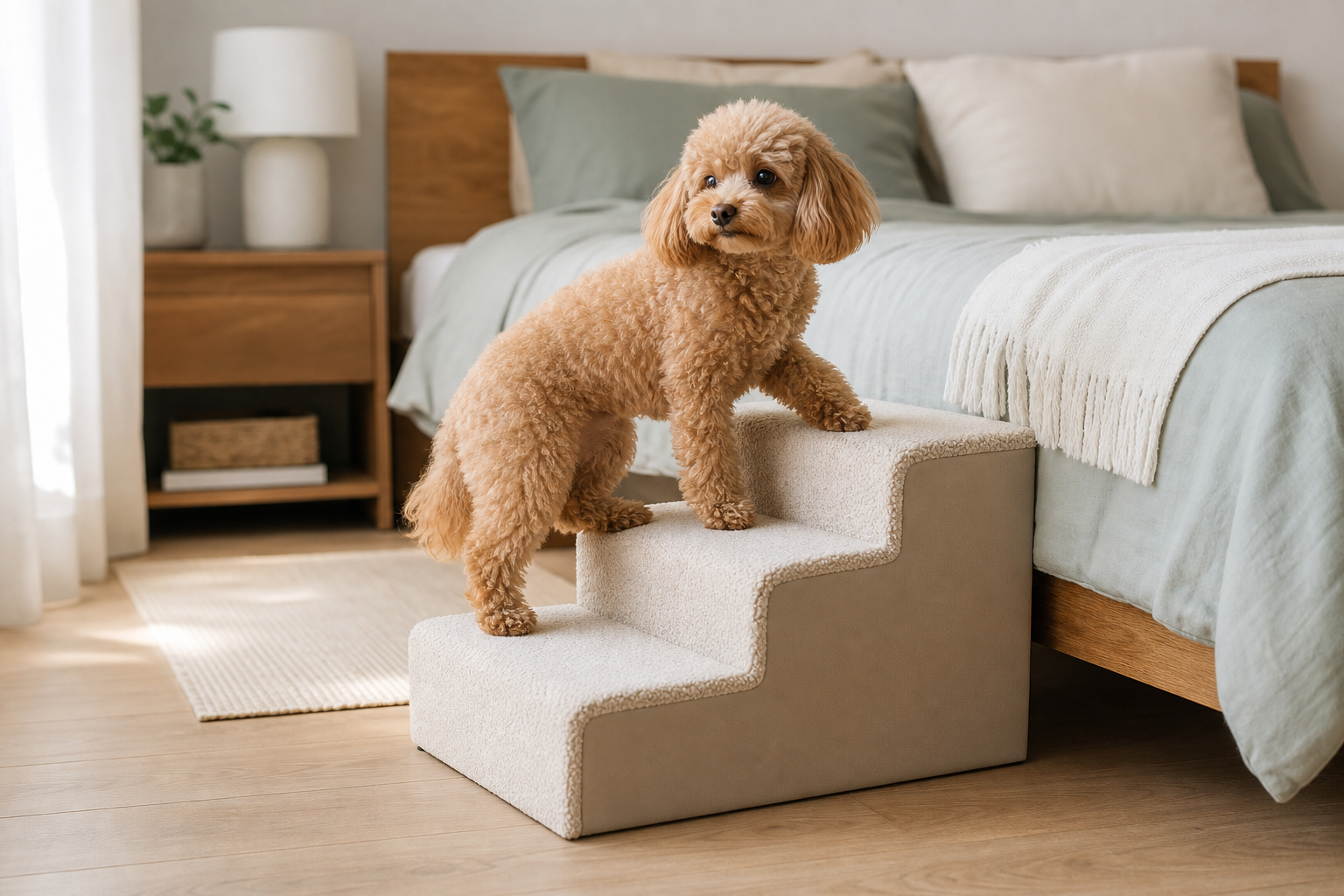
Stairs for small dogs: what they are and how to decide whether to buy them
Stairs for small dogs are step-based devices designed to help small dogs access beds, sofas, car seats, and other raised surfaces. Unlike ramps, which provide a continuous inclined surface, stairs have distinct steps that imitate human stairs on a miniature scale. The choice between stairs and a ramp affects your pet's comfort, safety, and everyday usefulness.
What stairs for small dogs are and why they matter
Stairs reduce the effort needed to climb onto high surfaces and limit jumping, which can worsen joint problems. They are particularly useful when the dog is agile but lacks the height or momentum needed to reach the furniture. Remember that these are home aids, not treatments: if your dog has medical conditions, consult a veterinarian before purchasing.
Stairs or ramp: how to choose based on your dog
The choice depends on the dog's physical condition, age, and attitude. In general:
- Stairs: suitable for small, confident dogs that know how to climb steps and prefer separate footholds for each paw.
- Ramps: suitable when a gentler incline is needed, or in cases of balance problems, spinal pain, or limited mobility.
For some long-backed breeds, such as dachshunds, improper use of stairs or ramps can aggravate spinal problems. In these cases, a veterinary assessment is essential, and a ramp is often the less traumatic option.
For a practical comparison of the two solutions, consult specialist resources that analyze the pros and cons of stairs and ramps for dogs.
Decision checklist: 6 criteria for choosing the right stairs
This checklist turns the choice into a practical comparison of measurable features. For each criterion, it tells you what to check and which result to prefer.
1. Measurements and step depth
Measure the height from the floor to the surface to be reached and the width of the available space. The step depth must be sufficient to support the entire paw, reducing instability and unnecessary micro-movements. Steps that are too narrow or low increase fatigue and the risk of tripping.
2. Weight capacity and maximum weight
Check the weight capacity specified by the manufacturer and choose stairs with a safety margin relative to your dog's weight. Even for small dogs, undersized stairs may warp or move, reducing stability over time.
3. Incline and ideal angle
The incline determines the effort required. For older dogs or those with joint problems, choose gentler angles. Adjustable stairs allow you to adapt the incline and height to the specific situation and are a good solution when you are unsure of the optimal angle.
4. Material and non-slip covering
Look for non-slip surfaces, such as textured rubber, densely woven fabrics, or foams with a grippy finish. Soft materials provide cushioning and reduce impact on the joints, while removable, washable covers simplify hygiene.
5. Stability and footprint
Check for non-slip feet, wide bases, and side supports. A stable set of stairs should not wobble or slide during use. Consider the space it occupies when positioned and whether it can be safely secured to the furniture.
6. Adjustability, foldability, and ease of cleaning
If you need to move the stairs frequently, choose lightweight, foldable models. Removable or washable covers make it easier to keep the product clean, especially for dogs that shed or get dirty often.
Veterinary contraindications and considerations for long-backed breeds

Stairs and ramps are functional aids, not treatments. They do not replace a veterinary evaluation for spinal problems, arthritis, or other conditions. Before introducing repeated access to different heights, assess the risk to the spine, especially for long-backed breeds such as dachshunds. If the dog shows pain, stiffness, or changes in movement, stop using them and consult your veterinarian.
How to get your dog accustomed to stairs: practical steps
Gradual training reduces anxiety and injuries. Proceed as follows:
- First approach: let the dog explore the stairs at its own pace without forcing it.
- Motivation with rewards: use treats, toys, or praise to associate the stairs with a positive experience.
- Short, repeated sessions: practice for 2–5 minutes several times a day to reinforce the behavior without tiring the animal.
- Gradual progression: reward every small step forward, from placing a paw on the first step to climbing an entire step.
- Do not force the dog: if it shows resistance or stress, slow down and consider seeking professional support.
For detailed instructions on teaching your dog to use the steps, you can consult the practical guide provided by Chewy.
Common mistakes to avoid and signs that require attention
Avoid these common mistakes:
- Steps that are too narrow or too deep, preventing natural footing.
- Slippery surfaces without an anti-slip coating.
- Excessive incline that increases effort and the risk of falls.
- Forcing the dog into sessions that are too long or persistent.
Signs that require attention: limping, persistent reluctance to climb, vocalizations, or changes in the way of walking. In these cases, stop using them and consult your veterinarian.
Where to buy and local contacts: information about Glabora in Fondi
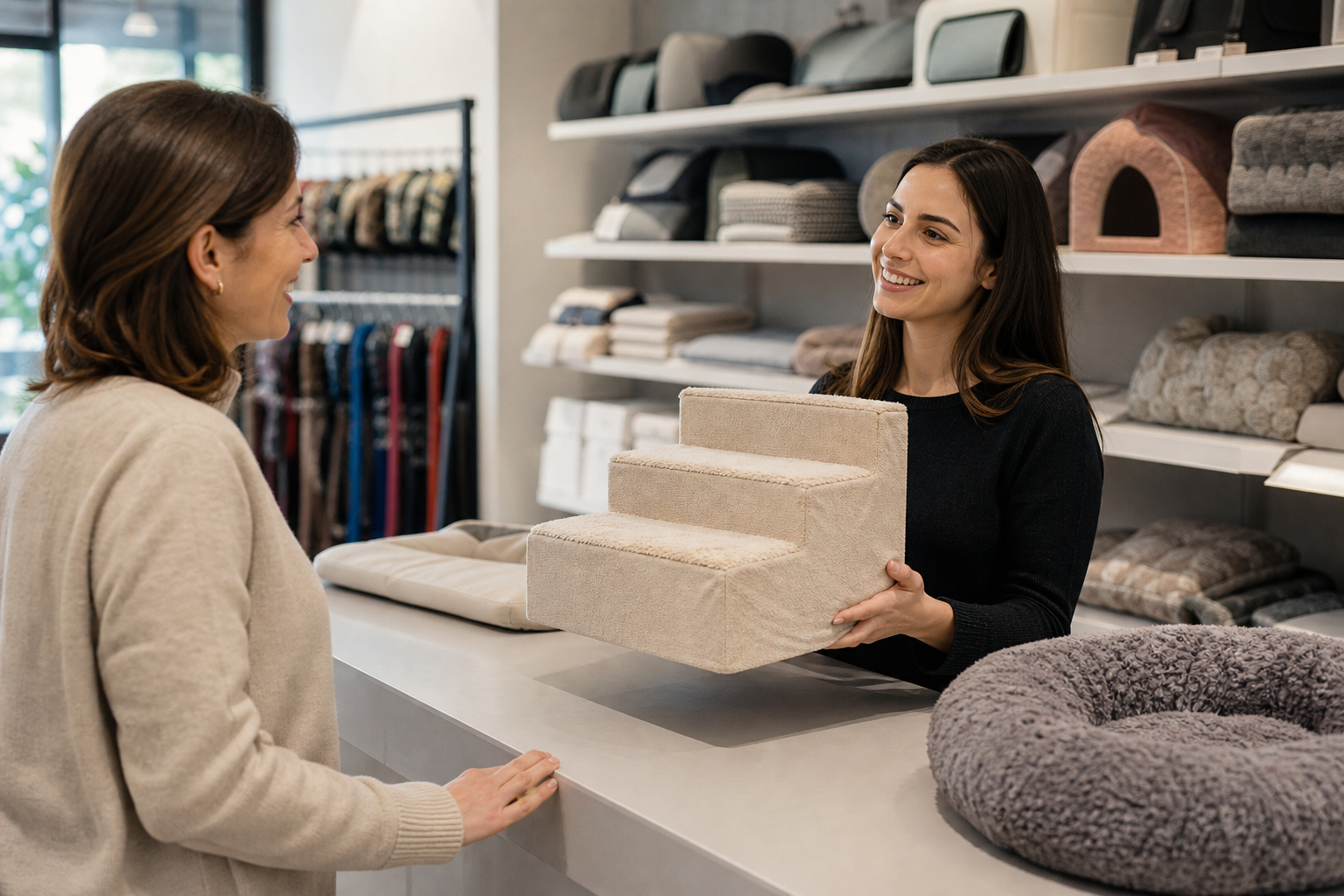
For information about available models, sizes, and materials, you can contact the local My Business seller through the official website or by phone. The business is located at Via Francesco Caracciolo 5, Fondi, in the province of Latina. For technical questions, call +39 329 563 0900 or visit the official website.
Before purchasing, measure the furniture's height and the dog's weight, and ask the seller to confirm the technical specifications. If the product is adjustable, ask for instructions on setting the step depth and incline.
Frequently asked questions
Are dog stairs suitable for a dachshund or other long-backed breeds?
Caution is necessary for dachshunds and long-backed breeds. Stairs can increase spinal stress if used improperly. Consult a veterinarian and consider a gently inclined ramp, which is often less traumatic for the back.
What measurements should I check before buying stairs for a small dog?
Check the total height required, the depth and width of the steps, the maximum load capacity, and the incline. Make sure the stairs provide enough tread for the paw to rest naturally.
When is it better to choose a ramp instead of stairs for my dog?
A ramp is preferable if the dog has balance problems, back pain, limited mobility, or if you want to reduce strain on the joints and vertebrae. Ramps provide a continuous ascent with less impact than steps.
How can I tell if the stairs are too steep for an elderly dog or one with joint problems?
If the dog stretches too far to climb, shows reluctance, or struggles noticeably, the incline is probably too steep. Look for gentler angles or adjustable models, and consult a veterinarian for personalized advice.
Which materials offer the best nonslip surface and are easy to clean?
Textured rubber coverings, nonslip fabrics, and dense foams with a grippy finish balance traction and comfort. Prefer removable or washable covers to make cleaning easier.
To learn more about the differences between stairs and ramps, read the analysis on Pawsbetter; for training advice, consult Chewy's guide; for reviews of adjustable stairs, see the selections on ProPawPicks.
If you would like to speak with a consultant about measurements, specific models, or advice on mobility accessories for dogs, contact My Business at +39 329 563 0900 or visit the location at Via Francesco Caracciolo 5, Fondi.
Sources and further reading: Pawsbetter, Chewy, ProPawPicks.
For information about products and availability, visit My Business.