

What is the best waterproof electric collar for dogs?
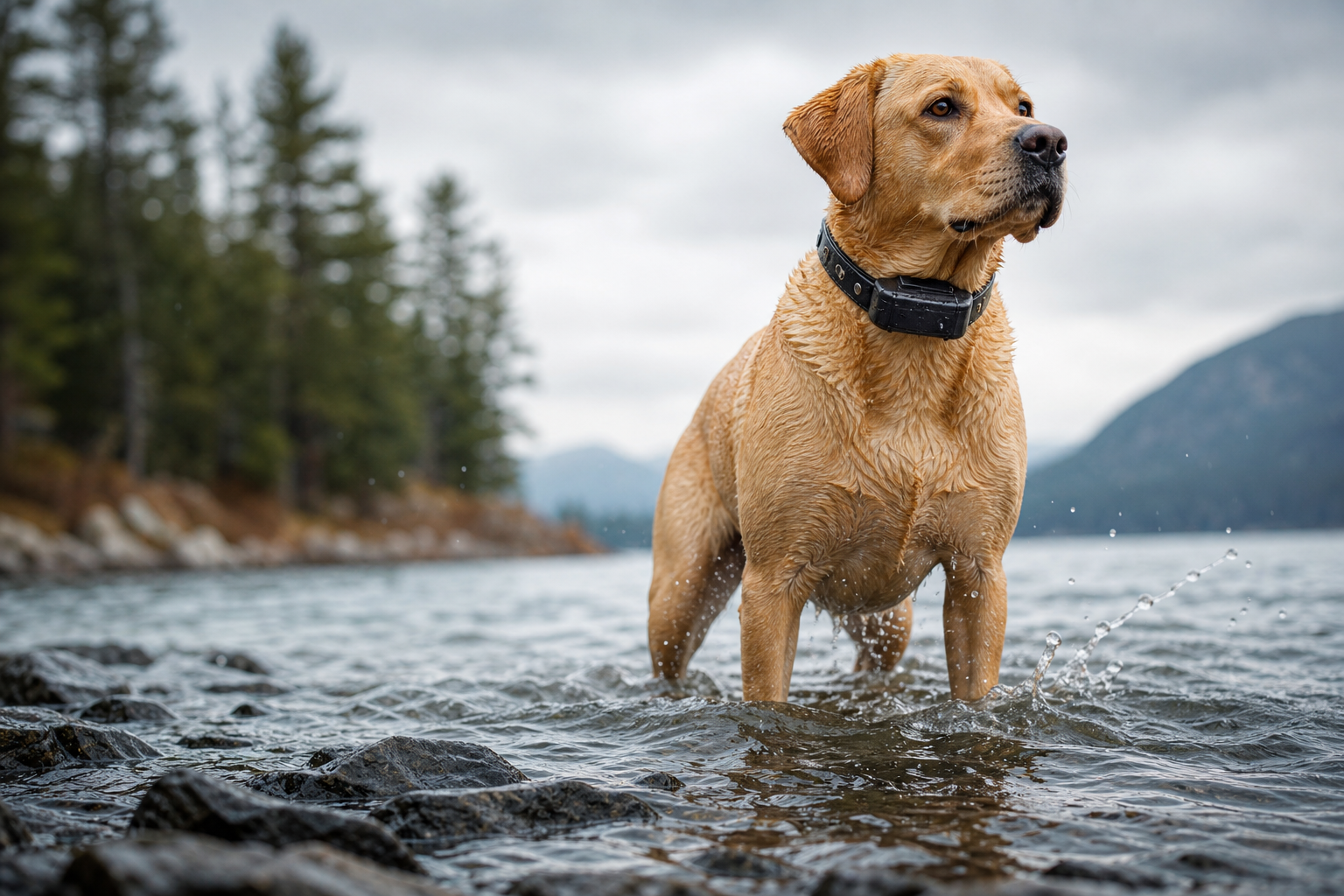
What is the best waterproof electric collar for dogs?
If you are looking for an electric collar that can withstand rain, splashes, or occasional immersion, this article explains how to interpret “waterproof” claims, which technical specifications to check, and which types to consider based on the dog’s activity.
Selection method and transparency
Here you will not find a ranking of specific products, but rather a method for evaluating products described as waterproof. The criteria used are: IP protection rating, water resistance of the receiver and remote control, quality of the seals and battery compartment, material and coating of the contact points, availability of non-painful modes (vibration, tone), adaptability to the dog’s neck and coat, stated range, warranty, and after-sales support. These parameters are suggested by technical guides on the subject (technical source).
What does “waterproof” really mean for an electric collar?
The term “waterproof” can refer to very different levels of protection. To understand what is suitable for your use, look for the IP or IPX rating in the technical specifications.
IP67 vs. IP68: which tests do they cover?
IP67 indicates protection from dust and resistance to temporary immersion in water up to one meter for 30 minutes. IP68 offers greater protection and allows prolonged immersion or immersion at greater depths, according to the conditions specified by the manufacturer. Some companies publish IP certifications for their receivers as evidence of the tests performed (technical example).
When the “waterproof” label is misleading
Many listings use the word “waterproof” without specifying the rating. This often means only resistance to rain and splashes. Comparison guides recommend asking for the IP certificate or documentation confirming the testing performed (commercial warning).
What to expect from a collar labeled “rain-resistant”
A collar described as “rain-resistant” is suitable for walks in the rain or for dogs that jump in puddles, but it is not designed for regular swimming or prolonged exposure to salt water. For the sea or continuous use in water, explicitly look for an IP rating that indicates immersion protection, along with maintenance instructions.
Technical specifications to check before purchasing
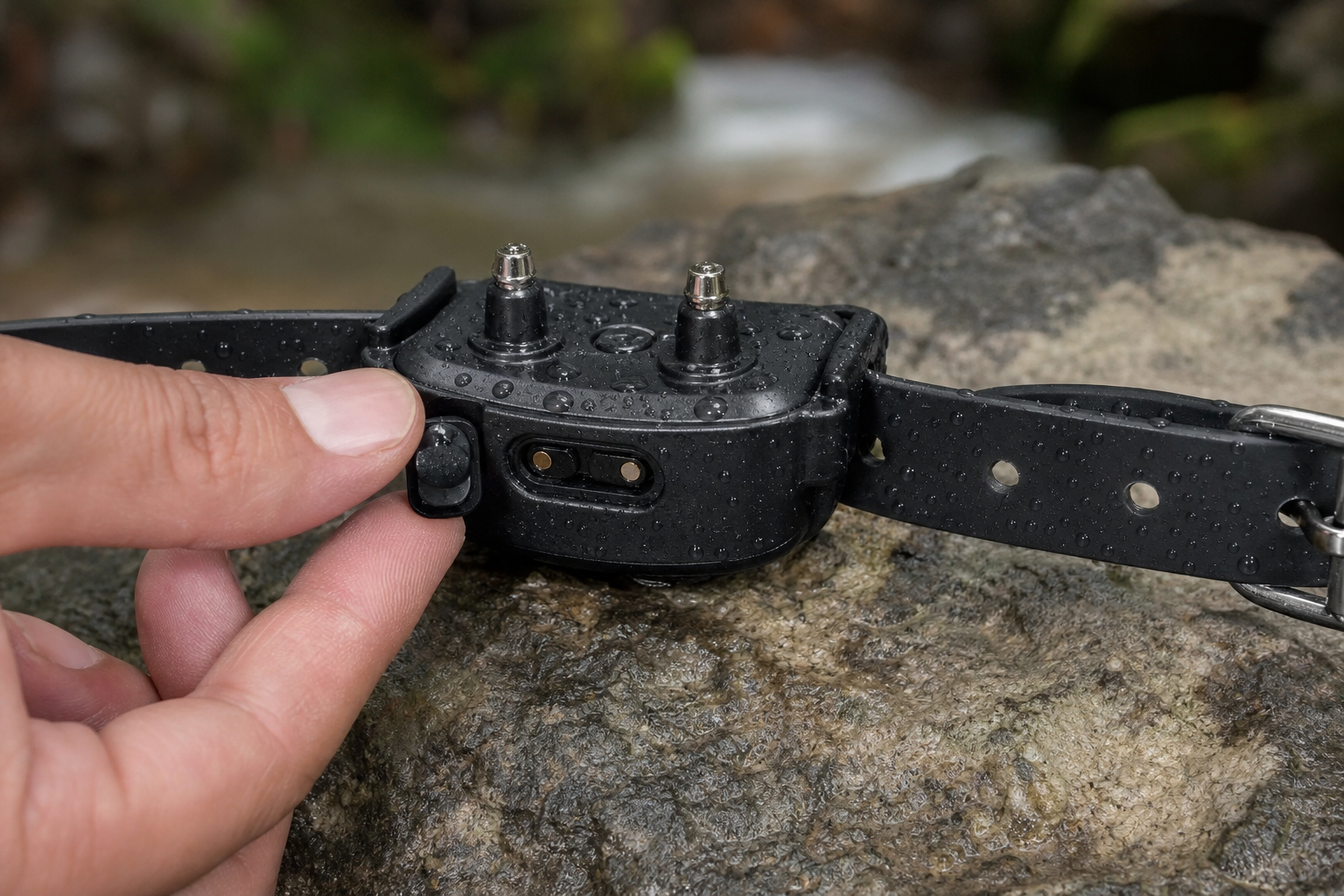
Check these elements in the technical specifications or ask the seller about them: they have the greatest impact on service life and safe use.
Why the contacts matter
- Material and coating: stainless steel or titanium contact points, preferably with a coating to reduce the risk of irritation and corrosion.
- Length and shape: they must reach the skin even through a dense coat without scratching.
- Accessories: alternative contact points or pads prevent abrasions on collars used for long periods.
Remote control and water resistance
It is not sufficient for only the receiver to be waterproof. If you plan to use the remote control in wet conditions, request the IP rating for the controller as well. Some models have splash-resistant remotes, while others are sealed for immersion.
Practical tests you can ask the seller to perform
- An IP certificate or technical data sheet indicating IP67 or IP68.
- A photo of the rating label or an excerpt from the manual showing the rating.
- Details about the warranty, return policy, and support in the country of purchase.
Industry sources recommend combining these checks with verifying the availability of non-electric modes and intensity adjustments (technical list).
Six types of waterproof collars to consider
Here you will find six practical categories, with their advantages, limitations, and the types of dogs they suit. This is not a numerical ranking of products, but a set of comparison suggestions.
1) Collars with an IP67 rating for temporary immersion
Advantages: they withstand heavy rain and brief immersion in fresh water, such as lakes or pools. Limitations: constant exposure to salt water requires maintenance and quick drying. Ideal for dogs that get wet occasionally.
2) Collars with an IP-rated remote control
Advantages: they allow training in the rain or on boats. Limitations: higher costs. Look for the same IP rating for the receiver and controller if you plan to use it in water.
3) Low-profile models designed for swimmers
Advantages: compact design and reduced contacts that do not interfere with swimming. Limitations: they may have fewer features or a shorter range. Suitable for dogs that swim frequently.
4) Collars with coated contacts and multiple modes
Advantages: coated contacts reduce irritation, while vibration and tone provide non-painful alternatives. Limitations: vibration effectiveness depends on coat thickness. Recommended for those who prefer less invasive options.
5) Long-range collars for outings
Advantages: useful for hiking and distance training. Limitations: the theoretical range often decreases in the presence of obstacles. Ask the manufacturer for evidence or testimonials about actual use.
6) Cheap collars with suspicious "waterproof" claims
Advantages: affordable price. Limitations: certifications are often missing and resistance declines rapidly, especially in salt water. Guides recommend caution and avoiding offers without documentation (warning).
An example of a commercial description found in some storefronts says "Waterproof Training Collar with 3 Adjustable Modes | Long-Distance Control Up to 1000 Meters"; do not take these claims for granted, always verify the technical details with the seller and request certificates (storefront example).
Safety, welfare, and non-electric alternatives
Using stimulation collars requires training: improper use may cause discomfort, skin irritation, or behavioral effects. Regularly inspect the skin beneath the contact points and stop using the collar if redness or lesions appear.
Effective alternatives include vibration collars, clicker training and positive reinforcement, training leashes, and lessons with a professional. If you have concerns, first consider working with a qualified trainer and consult a veterinarian about any pre-existing medical conditions (recommendation).
Where to buy in Italy and what to ask the seller
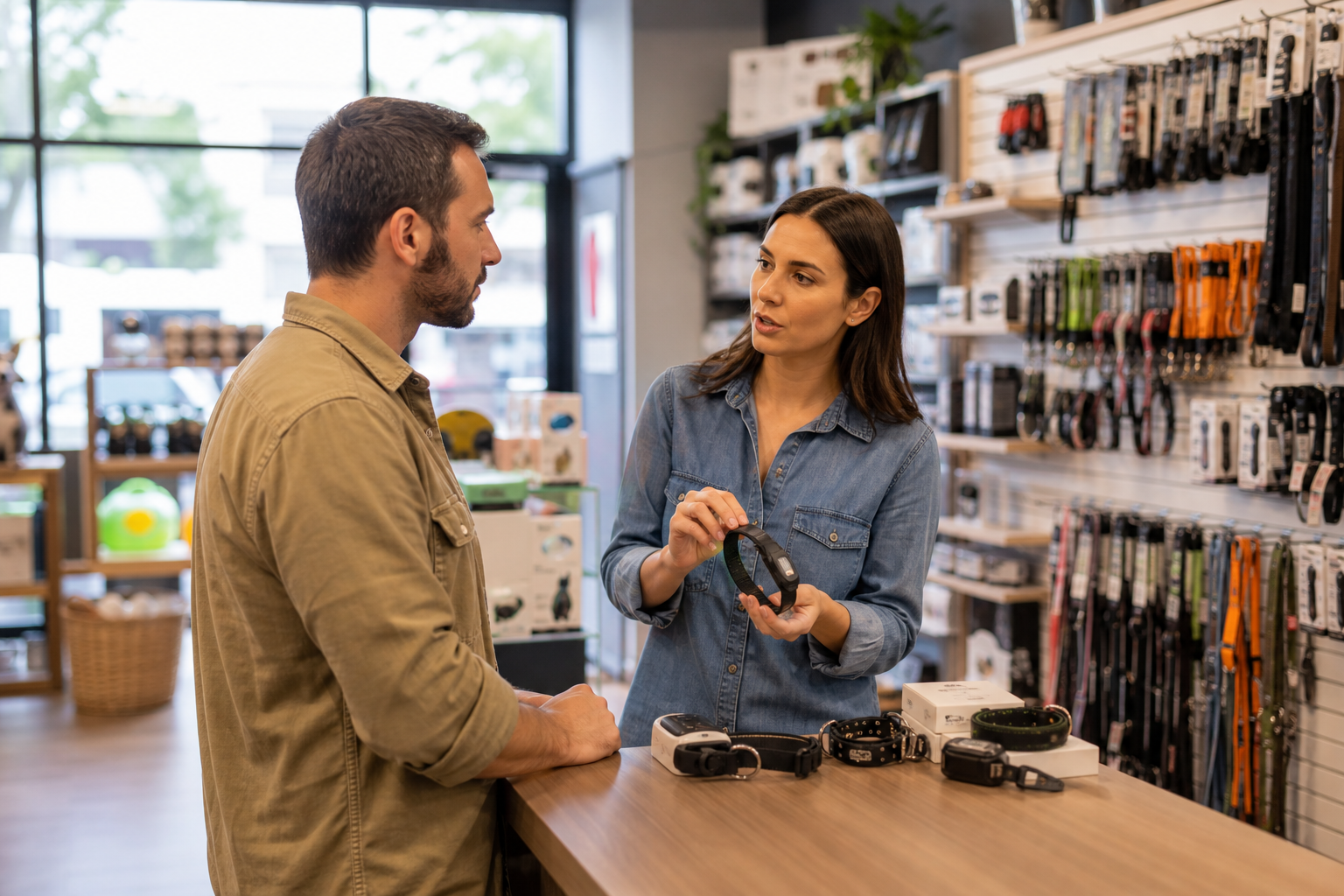
For a safe purchase in Italy, check the seller's reputation and request technical documentation. One example of an online retailer can be reached at the official address Glabora. The company listing provides these contact details: Via Francesco Caracciolo 5, Fondi (Latina), and telephone +39 329 563 0900. Always confirm opening hours and availability directly with the seller before purchasing.
Essential questions to ask the seller:
- Can you provide the IP certificate for the receiver and remote control?
- What is the return policy and warranty duration in Italy?
- Are replacement accessories available for the contact points and battery?
- What are the maintenance instructions after exposure to salt water?
Quick checklist to use before confirming your purchase
- Verify and document the receiver's IP rating.
- Verify the remote control's IP rating if you plan to use it in water.
- Vibration and tone modes available as alternatives.
- Adjustable intensity and low-power trial option.
- Tip material and coating suitable for the dog's coat.
- Documented testing or testimonials about the actual operating range.
- Warranty, return policy, and technical support in Italy confirmed.
- Cleaning and care instructions after exposure to salt water.
FAQ
What does IP67 mean for an electric collar, and is it enough for safe swimming?
IP67 indicates protection against dust and resistance to temporary immersion up to one meter for 30 minutes. For regular swimming or prolonged immersion, check whether the manufacturer specifies tolerance to salt water and provides maintenance instructions after use at sea (technical example).
Is a waterproof electric collar safe for my dog, or does it pose risks?
When used correctly and with regular skin checks, the risk can be limited, but no collar is free from potential side effects. Consider models with vibration and tone, and consult a trainer or veterinarian if you have concerns or notice skin reactions (recommendation).
How can I verify whether the remote control is also truly waterproof?
Ask the seller for the remote control's IP rating, a photo of the label, and the technical manual. Without documentation, consider it unsuitable for use in water.
Can I use an electric collar at the seaside, and how should I clean it after exposure to salt?
Yes, but carefully: always rinse the device with fresh water after exposure to salt, dry it thoroughly, and check the contacts. Follow the manufacturer's instructions because salt water accelerates corrosion and may void the warranty if not treated properly.
Should I consult a veterinarian or trainer before using an electric collar?
Yes, it is especially recommended if you have no experience with stimulation collars, if your dog has health problems, or if you notice behavioral changes. A qualified trainer will teach you how to use it effectively and in a way that respects animal welfare.
Final question: which of these types seems most suitable for your dog and its daily activities?
For information about the products, IP certificates, and warranty details, visit the seller's official page and contact customer service for technical confirmation: Glabora or call +39 329 563 0900 during the hours indicated by the seller.