

Comparison of tartar removal products for dogs and cats
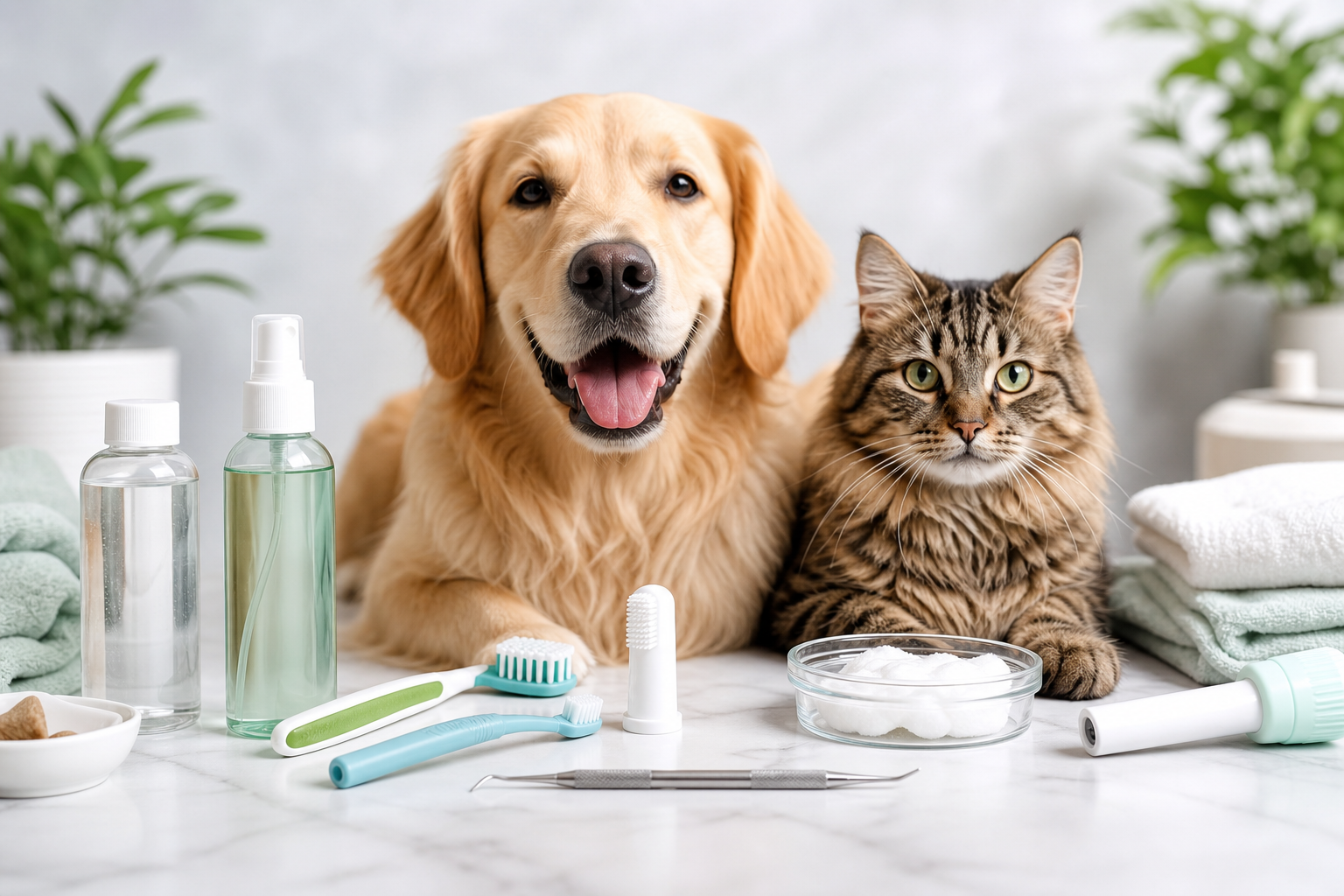
Tartar-removal products compared for dogs and cats
What to expect from this comparison
This article compares the main types of at-home tartar-control products, identifies verifiable criteria to look for, and explains their limitations compared with professional cleaning. The selection is based on published evidence and key indicators of effectiveness, such as the VOHC seal. To check product availability and receive local support, visit the Glabora website.
Methodology and criteria used
To evaluate each category, we considered the mechanism of action, independent evidence of plaque or tartar reduction, ease of use, safety for the species and size, and clinical limitations. The primary criterion for effectiveness is the presence of the VOHC seal, which indicates controlled testing for plaque or tartar reduction (PetsLikeMine).
Whenever possible, we favored sources that discuss the practical limitations of at-home products and recommend veterinary evaluation for hardened tartar (PetCareLab). The goal is to provide useful criteria for making safe choices, not to suggest that a product can replace professional cleaning.
Why not replace the veterinarian
At-home products can reduce plaque formation and slow tartar buildup, but they do not remove hardened deposits. Professional veterinary dentistry includes evaluation, scaling and polishing, imaging, and a treatment plan—elements that at-home interventions do not provide (PetCareLab).
Why look for the VOHC seal
The VOHC seal indicates that a product demonstrated a statistically significant reduction in plaque or tartar in controlled tests compared with a control group. This helps distinguish products with real evidence from marketing claims (PetsLikeMine).
What the seal means in practice
A product with the VOHC seal has been tested using specific protocols. In practice, the seal suggests that the product may help with prevention when used regularly, but it does not guarantee the same performance for every animal or condition.
Seal limitations
The seal covers the test result but not all possible variables, such as the animal's size, frequency of use, or the presence of advanced periodontal disease. Always check the manufacturer's instructions and whether the test was conducted on the species concerned (RunyePet).
Product types compared and when they are useful
Below are the five most common categories, including how they work, their pros and cons, and realistic expectations.
Enzymatic toothpastes
- How it works: enzymes and chemical agents reduce the bacterial load in plaque and slow its mineralization into tartar.
- When to use: as part of the daily routine for animals that tolerate brushing or manual application.
- Limitations and evidence: useful for prevention but ineffective at removing hardened tartar. They are more effective when combined with other good oral hygiene practices (PetCareLab).
Oral gels and sprays
- How it works: topical application that reduces bacteria or forms a protective barrier on the tooth surface.
- When to use: for animals that do not accept toothbrushing, as support between cleanings.
- Limitations and evidence: the benefit is often modest and depends on the composition and frequency of use. Check the ingredients and suitability for cats or dogs before use.
Dental chews
- How it works: they combine the mechanical action of chewing with active ingredients that help reduce plaque.
- When to use: excellent as a daily supplement for dogs that enjoy chewing, and also useful as a functional reward.
- Limitations and evidence: they may reduce plaque and tartar if they have VOHC approval and their shape and texture encourage proper chewing for the animal's size. Chews are less common for cats, so you should choose products specifically designed for felines (PetCareLab) (RunyePet).
Water additives
- How it works: substances dissolved in water reduce oral bacteria with daily use.
- When to use: useful for animals that are difficult to treat with toothpaste or chews because they require no direct interaction.
- Limitations and evidence: the effect is generally mild and does not remove tartar that has already formed. For cats, always check the formulation and make sure it does not contain ingredients unsuitable for felines (PetCareLab).
Wipes and non-invasive tools
- How it works: gentle mechanical removal of plaque with wipes or very soft toothbrushes.
- When to use it: for quick cleanings or for animals that tolerate only minimal contact with the mouth.
- Limitations and evidence: effective on fresh plaque but ineffective on hard tartar. Avoid sharp tools and do-it-yourself practices that can damage the gums and oral tissues (PetCareLab).
Practical criteria for choosing the right product
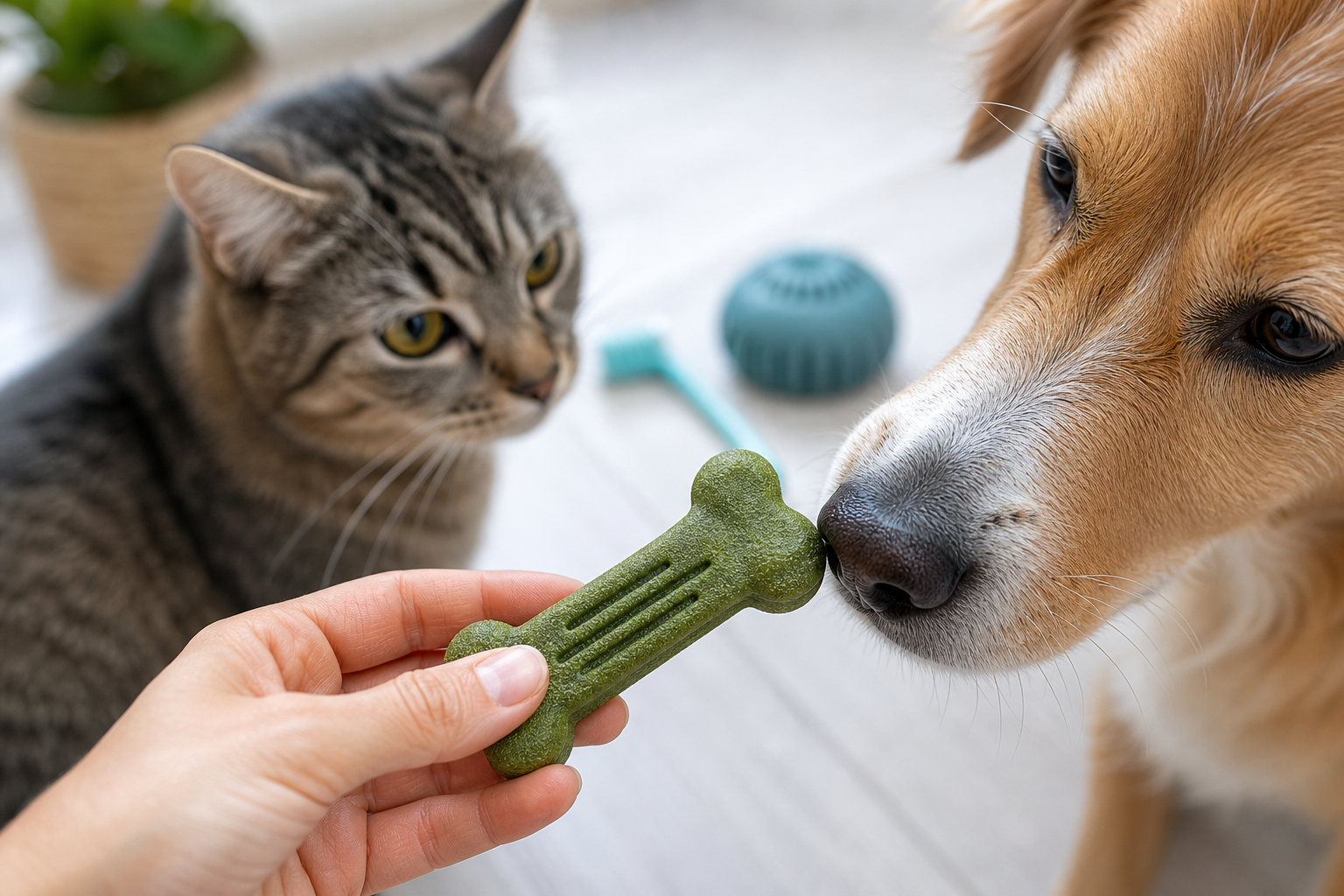
Use this checklist before purchasing an oral hygiene product for your pet.
Criteria priorities
- VOHC Seal when available for plaque or tartar reduction.
- Species-specific guidance to avoid ingredients that may be harmful to felines or sensitive dogs.
- Size and texture appropriate for the animal to reduce the risk of choking or abnormal ingestion.
- Clear instructions for use and information about contraindications.
- Published evidence or references to independent studies when available.
How to read the label and warnings
Check whether the product is intended for dogs or cats, its active ingredients, the recommended frequency, and contraindications for animals with pre-existing conditions. If in doubt, contact the manufacturer or a veterinarian.
Choosing between products for dogs and cats
Cats are sensitive to specific flavors and ingredients. Do not use products formulated for dogs on cats without consulting a veterinarian, and prefer products tested for felines when available (PetCareLab).
How to use these products safely and mistakes to avoid
Practical steps for introducing toothpaste and chews
- Start with small amounts and short sessions, and reward and reassure the animal.
- For toothpaste, let the animal get used to the taste before attempting actual brushing.
- For chews, choose the correct size and always supervise the first use to assess the risk of breakage.
- Follow the manufacturer’s instructions on frequency and duration, and do not combine multiple products without professional advice.
Signs of an adverse reaction
- Vomiting or diarrhea after use.
- Oral irritation, swollen gums, or bleeding.
- Changes in appetite or behavior.
If you notice any suspicious reactions, stop using the product and contact your veterinarian.
Home technologies to avoid
Some commercial equipment, such as “ultrasonic pet cleaners,” lacks sufficient independent evidence. It is preferable to rely on products with recognized certifications or your veterinarian’s advice (PetCareLab).
When veterinary cleaning is necessary and what to expect
Cases requiring immediate action
- Persistent, strongly foul-smelling breath.
- Gum bleeding or obvious mouth pain.
- Extensive tartar visible above and below the gumline.
These signs require professional evaluation. Veterinary cleaning includes diagnosis, scaling and polishing, imaging if necessary, and treatment planning (PetCareLab). Discuss the recommended preoperative tests and options for reducing anesthetic risks with your veterinarian.
Questions to ask the veterinarian before the procedure
- What are the risks and benefits of cleaning for my pet?
- Are preoperative tests or diagnostic imaging needed?
- What is the post-procedure follow-up and prevention plan?
Quick comparison and buying decision guide
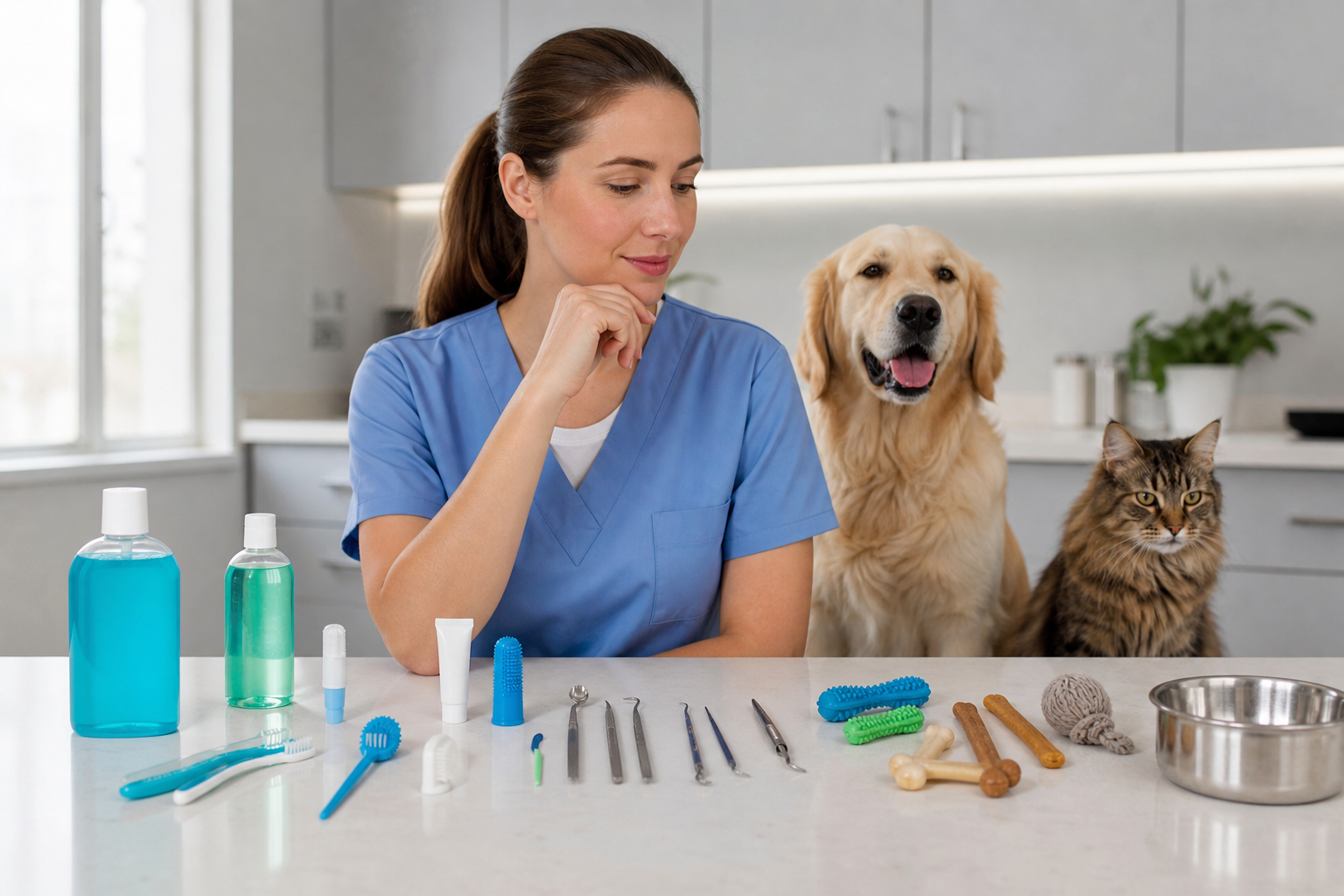
A summary for making a quick choice based on the use case.
| Product type | Expected effectiveness | VOHC | Ease of use | Best use case |
|---|---|---|---|---|
| Enzymatic toothpaste | Good prevention | Various brands | Moderate, requires brushing | Daily routine |
| Gel or spray | Light support | Rare | High | Sensitive animals |
| Dental chews | Good if VOHC-approved | Present in some products | High | Dogs that actively chew |
| Water additives | Light | Rare | Very high | Daily support for hard-to-handle pets |
| Wipes | Removal of fresh plaque | No | Very high | Quick cleaning |
Local information about Glabora
To check product availability and receive local support, visit Glabora's official website. Address: Via Francesco Caracciolo 5, Fondi, Latina. Weekday hours: 09:00–17:00. Check the website to confirm hours and product selection Glabora.
Common objections and how to evaluate them
I don't want anesthesia
Veterinary cleaning may require anesthesia for safety and to perform a complete procedure. Talk to your veterinarian about preoperative assessments and options for reducing risks, and ask what monitoring will be performed during the procedure.
I have seen tools for removing tartar at home
Sharp tools can cause injuries and infections. Avoid do-it-yourself practices and choose tested products or seek professional advice (PetCareLab).
Products without VOHC cost less
An inexpensive product may offer some benefits, but the lack of VOHC evidence means its effectiveness is not guaranteed. Use the checklist to evaluate ingredients and safety before purchasing.
FAQ
Can enzymatic toothpaste remove tartar that has already formed?
No. Enzymatic toothpaste helps prevent plaque formation and may slow tartar buildup, but it does not remove hard deposits that have already formed. Those require professional veterinary cleaning (PetCareLab).
How can I recognize a chew that is truly effective against tartar?
Check for the VOHC seal, verify that the shape and texture promote proper chewing for your pet's size, and look for references to independent studies or published tests (RunyePet).
Are water additives safe for cats?
Some additives are formulated for cats, but not all are suitable. Read the label carefully and avoid products with ingredients not intended for felines. If in doubt, consult your veterinarian (PetCareLab).
When should I schedule a veterinary dental cleaning?
If you notice very bad breath, bleeding gums, difficulty eating, or extensive tartar near the gumline, schedule a veterinary visit for a complete evaluation (PetCareLab).
To check the availability of oral hygiene products and receive local support, visit Glabora.