

Orthopedic Dog Bed vs. Regular Bed: What Are the Real Benefits?
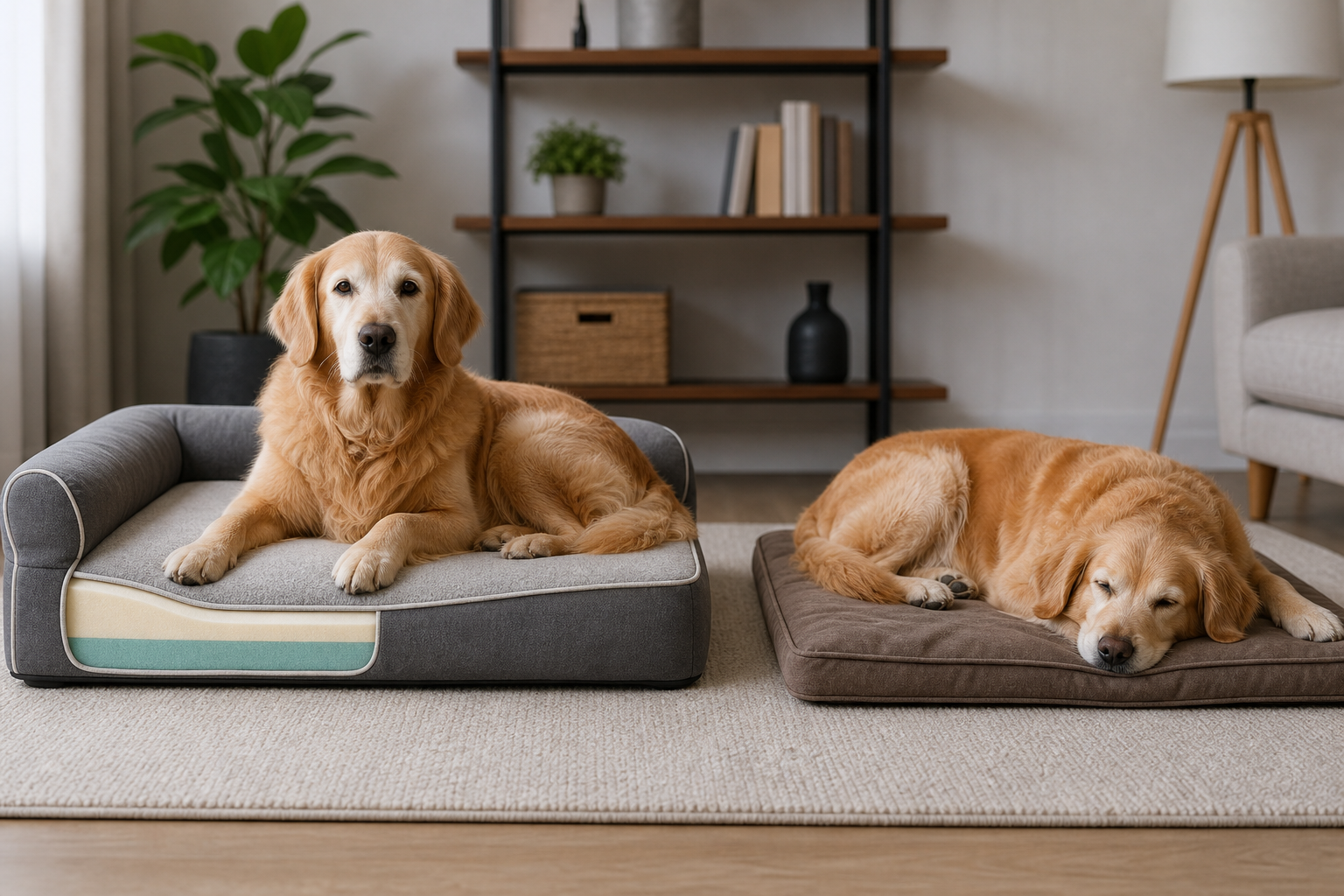
Orthopedic dog bed vs. regular bed: what are the real benefits?
When is it worth choosing an orthopedic bed for your dog, and what really changes compared with a traditional bed? This article offers a practical comparison: it explains the definition and components of an orthopedic bed, lists the expected benefits along with the limitations of the available evidence, indicates which dogs benefit most, details how to compare materials and sizes, provides maintenance advice, and concludes with information on trying and purchasing the Soft Dream model in Fondi from Glabora.
What is an orthopedic dog bed, and how does it differ from a regular bed?
An orthopedic dog bed is designed to provide more even support for the animal's body and reduce pressure points. Typical features include a central layer of high-density foam or memory foam, a stabilizing base, and a removable cover. These materials distribute weight more evenly than traditional padded beds, which often use lightweight filling and tend to lose their shape more quickly (Nandog), (Paws In The Green).
Observed real-world benefits and limitations of the evidence
The most frequently observed benefits include greater comfort at rest, reduced pressure on painful joints, and greater durability than budget beds. High-density foam and memory foam help support the body's contours and retain their shape over time, according to industry technical guides (Fur King), (PetSmart).
However, it is important not to consider an orthopedic dog bed a medical treatment. Large-scale randomized clinical studies demonstrating consistent effects for all dogs are lacking; many conclusions are based on clinical experience and owner observation. For this reason, the benefits should be assessed on a case-by-case basis (Paws In The Green).
Which dogs benefit most
- Older dogs with stiffness or signs of osteoarthritis, who often experience relief from pressure points.
- Dogs diagnosed with arthritis, hip dysplasia, or other joint conditions; the additional support may improve comfort while resting (PetSmart).
- Large or overweight dogs, which place greater loads on their joints and benefit from more resilient foams (Fur King).
- Dogs recovering after surgery, when the veterinarian recommends stable support to facilitate rest and healing.
Conversely, rapidly growing puppies or young, highly active dogs may not need an orthopedic bed immediately; in these cases, a good-quality traditional model may be suitable until symptoms appear.
How to compare models: features to evaluate
To make an informed choice, compare these measurable factors at the time of purchase:
- Foam density and type: higher-density foams provide longer-lasting support; check the specifications provided by the manufacturer.
- Mattress thickness: adequate thickness helps distribute weight, but greater thickness is not always the best choice for every dog.
- Removable, washable cover: makes hygiene easier and extends the product's lifespan.
- Correct size: make sure the dog can lie down without bending excessively.
- Raised edges: useful for dogs that like to rest their heads, but they can hinder access for dogs with mobility problems.
- Certifications and warranty: check the quality of the materials and the seller's return and warranty policy.
These criteria reflect the functional differences documented in industry guides (Nandog), (Fur King).
Memory foam vs. high-density foam vs. traditional filling
- Memory foam: conforms to the body and reduces pressure points; it may retain heat and is generally more expensive.
- High-density foam: provides stable support and greater durability, and is often preferred for large dogs.
- Traditional filling: more affordable, tends to compress and lose support over time.
The choice depends on balancing thermal comfort, durability, and budget. For long-term joint support, technical sources recommend higher-density foams (Fur King).
Sizing and how to measure your dog
Measure the dog from the tip of its nose to the base of its tail and consider its height when sitting. Add 10–15 cm to the length to allow the dog to stretch out. A mattress that is too small forces the animal into unnatural positions and concentrates weight on pressure points.
Maintenance, expected lifespan, and warranties
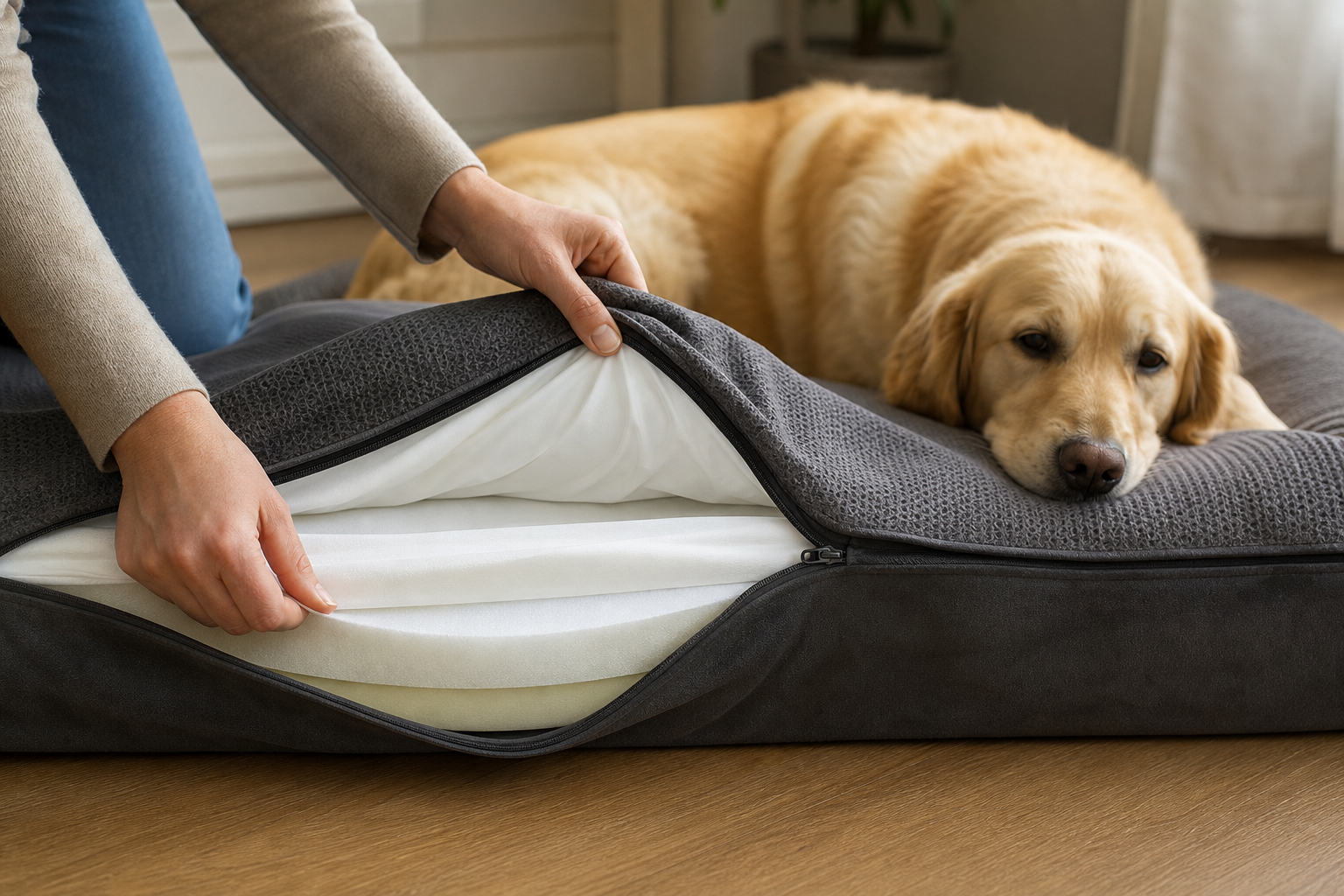
A removable, washable cover improves hygiene. To extend the mattress's lifespan, rotate the bed periodically and air it out. Quality orthopedic beds last longer than inexpensive models that deform within a few months, but actual lifespan depends on the materials and usage (Fur King).
Ask the seller for precise information about the warranty, foam composition, and resistance to moisture and odors.
Practical comparison: orthopedic dog bed vs. traditional dog bed in 6 points
- Joint support: high with orthopedic beds, low with traditional beds.
- Immediate comfort: an orthopedic bed contours to the body and adapts to it; a traditional bed often feels familiar right away.
- Durability: orthopedic beds last longer when made with quality foam; traditional beds tend to compress.
- Maintenance: an orthopedic bed with a washable cover is practical; a traditional bed may be less structured but is often washable.
- Price: orthopedic beds are generally more expensive; traditional beds are cheaper but have a shorter lifespan.
- Clinical recommendation: orthopedic beds are indicated for dogs with joint pain; a traditional bed is sufficient for young, healthy dogs.
Common objections and myths to dispel
"It’s just marketing." Response: some products are promoted through marketing, but the physical properties of high-density foam and memory foam explain functional benefits, even though broad clinical evidence is lacking (Paws In The Green).
"My dog won’t use it." Response: many dogs adjust if the bed is placed in a familiar location and retains reassuring scents. A trial period at home or in the store helps determine whether the dog accepts it.
"It’s too expensive." Response: consider the cost per year of use. A sturdy bed may last several years, while inexpensive beds require frequent replacement (Fur King).
When to talk to the veterinarian before buying
Consult a veterinarian if your dog shows persistent limping, pain at rest, loss of appetite, or behavioral changes. The veterinarian can incorporate the bed choice into a treatment plan and recommend specific features based on the condition (Paws In The Green).
Soft Dream: product features and how to buy it in Fondi
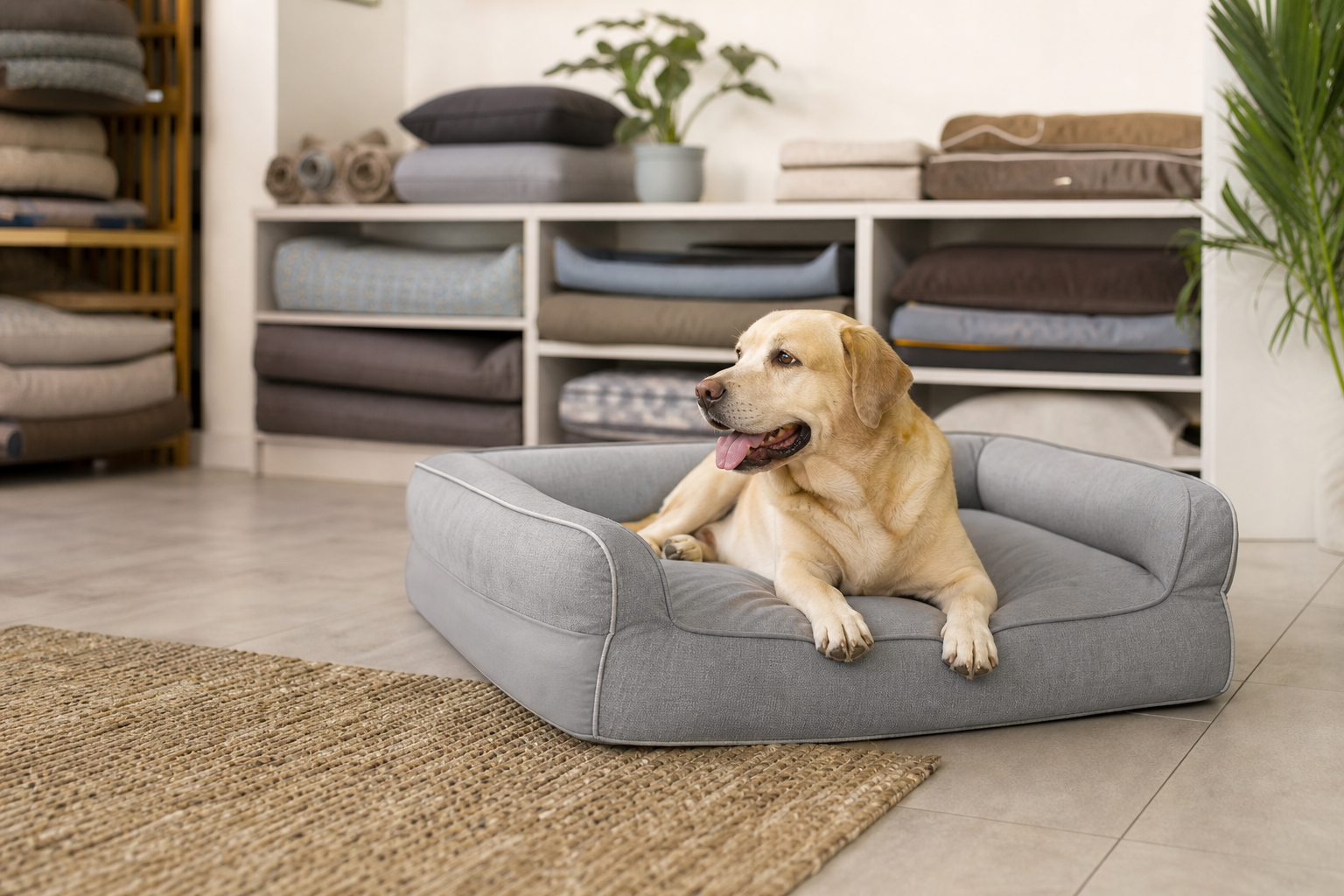
Soft Dream is the orthopedic model available in the company’s catalog, described as a bed with joint support and a washable cover. For technical details and availability, visit Glabora’s official page: Glabora. For information about sizes and to try the bed with your dog, you can contact the store at +39 329 563 0900 or visit Via Francesco Caracciolo 5, Fondi. Opening hours are Monday–Friday, 09:00–17:00.
Quick criteria for deciding which bed to buy today
- If your dog is elderly or has joint pain, choose an orthopedic bed with high-density foam or memory foam.
- If the dog is young and healthy and your budget is limited, a good-quality traditional bed may be sufficient, with the option to upgrade later.
- Make sure the cover is removable and washable.
- Measure the dog as indicated above before choosing the size.
- When possible, try the bed in a store or check the return policy and warranty.
Frequently asked questions
Can an orthopedic bed cure my dog's arthritis?
No, an orthopedic bed does not cure arthritis. It can improve comfort while resting and reduce pressure on the joints, complementing the treatment plan recommended by the veterinarian (Paws In The Green).
How do I choose the right size for my dog?
Measure the dog from the tip of the nose to the base of the tail and consider the height from the ground to the shoulder. Add 10–15 cm to the length to allow the dog to stretch out comfortably.
How often should I wash the orthopedic bed cover?
It depends on usage and the dog's hygiene. Generally, washing the cover every 2–4 weeks is good practice, or more often if the dog gets dirty or sheds heavily.
How long does an orthopedic bed typically last compared with a traditional one?
Lifespan varies depending on the materials and usage. A high-quality orthopedic bed with high-density foam can last for several years, while inexpensive traditional beds tend to compress and lose support sooner (Fur King).
What to do if my dog ignores the new orthopedic bed
Place the bed in a familiar area, put a blanket with the dog's scent on it, and reward the dog when it approaches or uses the bed. If the refusal persists, consider an adjustment period or try a model with different bolsters or alternative materials.
To try Soft Dream or get assistance with sizes and availability, visit the official Glabora page, or go to the store at Via Francesco Caracciolo 5, Fondi, Monday through Friday, 09:00–17:00. For immediate information, call +39 329 563 0900.