

How to Clean Cat Teeth: A Practical Step-by-Step Guide
How to Clean Cat Teeth: A Practical Step-by-Step Guide
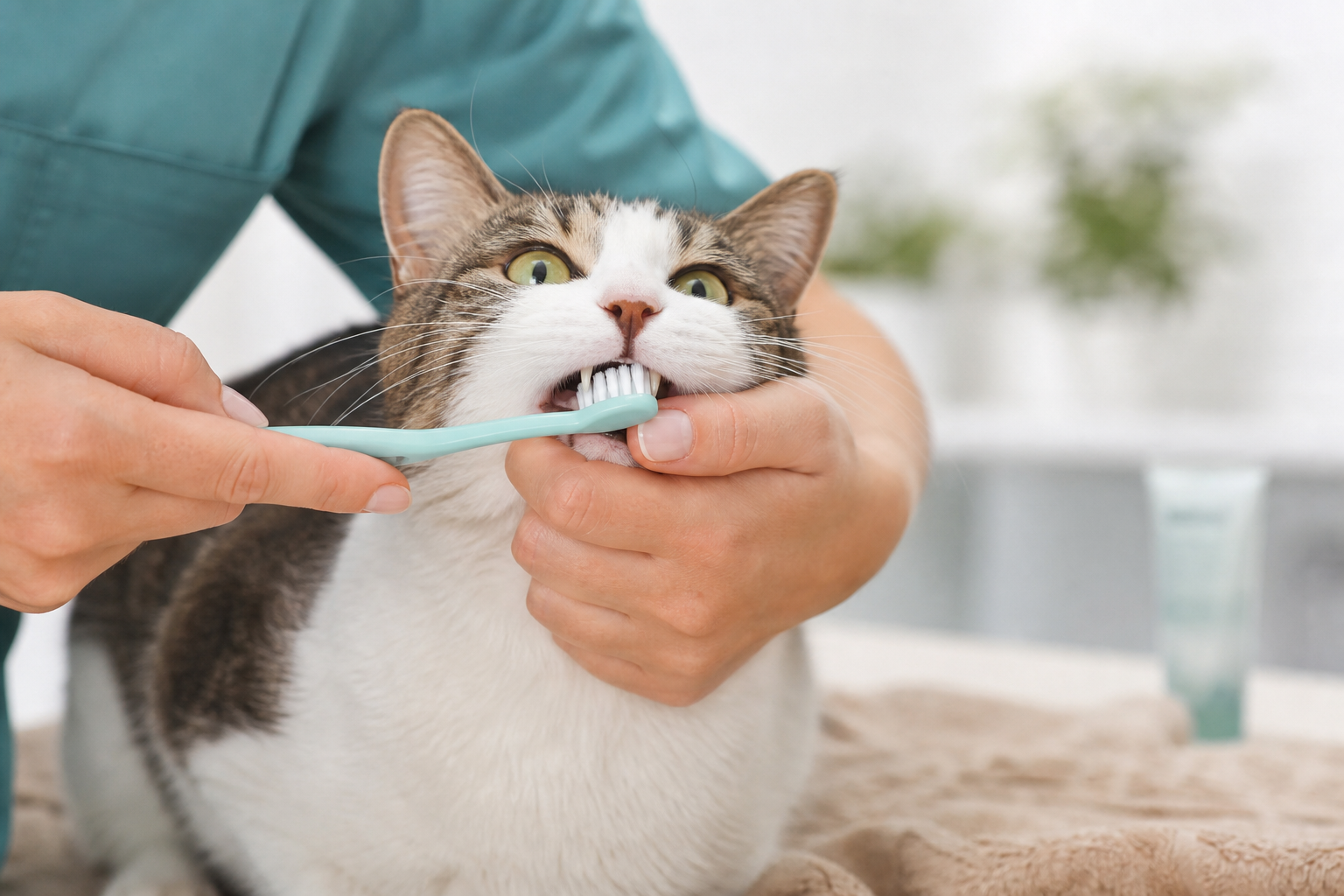
Cat dental care is a routine built with patience and small steps forward. The purpose of the first sessions is to get the cat accustomed to the taste and sensation of the toothpaste and toothbrush, not to achieve perfect cleaning on the first attempt. During the first few weeks, sessions generally last 2-10 minutes; as the cat becomes more comfortable, you can extend their duration. Veterinary sources recommend a gradual approach like the one illustrated here (PetMD, Zoetis Petcare).
What to Expect and Estimated Time
Do not expect perfect cleaning right away. The realistic goal for the first week is for the cat to tolerate the taste of the toothpaste and contact with its lips. Visible progress in tolerance may appear after a few days, but establishing a complete, consistent home routine often takes weeks. Short, frequent sessions are more effective and less stressful than long, infrequent attempts.
Goal for the First Week
Have the cat lick the toothpaste from your finger or accept it without pulling away when you touch its muzzle. If this happens, gradually move on to contact with gauze or a finger brush.
When to Stop and Try Again
Stop if the cat shows clear signs of fear, tries to bite forcefully, or whines. Return to an earlier step in the acclimation process, try shorter sessions, and reward calm behavior to reinforce the positive association.
Necessary Tools and Selection Criteria
Choose products designed specifically for animals and suitable for a cat's mouth: this reduces irritation and improves results.
Essential List
- Toothbrush specifically designed for animals with a small head and soft bristles.
- Finger brush, useful during the initial stages for brief contact.
- Cat toothpaste with appealing flavors that is safe to swallow.
- Gauze or clean cloths for gentle rubbing when brushing is not possible.
- Small food rewards to reinforce positive behavior.
Veterinary guidelines identify a toothbrush specifically designed for animals as the most effective tool for removing plaque (PetMD).
How to Choose a Toothbrush and Toothpaste
For small cats, choose very small brush heads; for cats with sensitive gums, choose softer bristles. Always use toothpaste formulated for cats: human toothpaste may contain ingredients that are unsafe or unpleasant-tasting for them.
How to Get Your Cat Used to It in 5 Steps
Work in small steps and reward every improvement. Veterinary sources suggest turning the sessions into brief, positive experiences (Catster, PetMD).
Detailed steps with progress cues
- Step 1 - becoming familiar with the taste: offer a small amount of toothpaste on your finger or a teaspoon. If your cat licks it without becoming stressed, move on to the next step. Estimated time: 1–3 days.
- Step 2 - touch the muzzle and lips: pet your cat's muzzle and lift the lips for a few seconds, immediately rewarding calm behavior.
- Step 3 - touch the teeth with gauze: wrap clean gauze around your finger, moisten it with toothpaste, and gently rub the front teeth for a few seconds.
- Step 4 - finger brush: use the finger brush for very brief movements, 3–5 seconds on one area, then reward your cat. Gradually increase the duration.
- Step 5 - move on to the toothbrush: when your cat accepts the finger brush, try the toothbrush with light, circular movements on a few teeth at a time.
If your cat pulls away, return to a previous step and try again after a few hours or the next day. Demonstration videos can help you visualize the correct movements (Catster).
Rewards and routine
Reward your cat immediately with a treat or cuddles. Choose a calm time, such as after playtime or a meal, and keep the same sequence to create a predictable routine.
Step-by-step tooth-brushing procedure
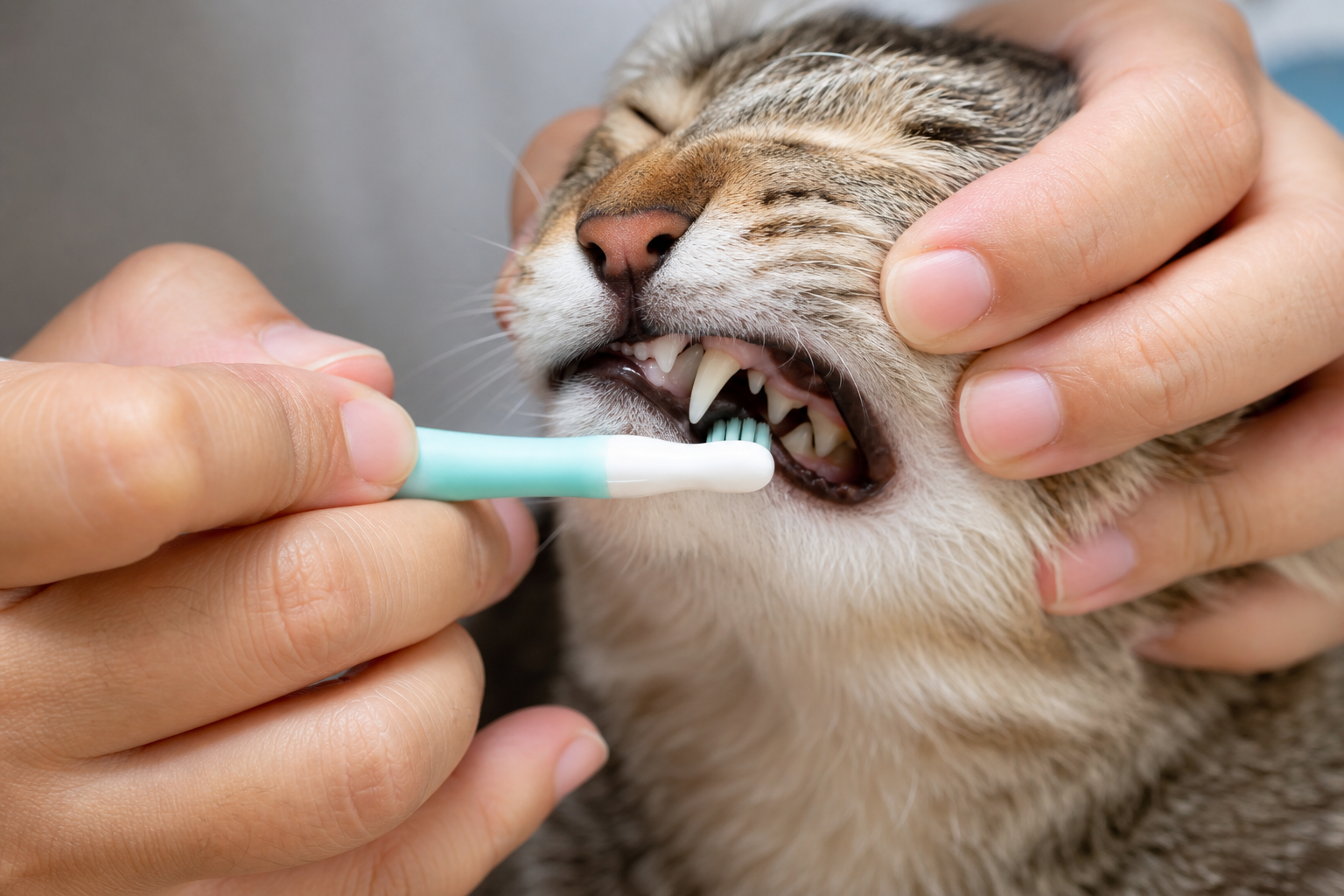
Below is a practical script you can follow the first few times. Keep your voice calm and your movements slow.
Position and secure hold
- Sit with your cat on your lap or on a nonslip table. If your cat tends to wriggle, wrap it in a towel, leaving the head uncovered.
- With your non-dominant hand, gently lift the upper lip to expose the teeth.
- Apply a little toothpaste to the toothbrush and let your cat taste it before you begin.
Recommended movements and time per area
Brush using circular or outward movements, focusing on the outer surfaces of the teeth. At first, work on 2–4 teeth per session, 5–10 seconds per tooth, and gradually increase until you cover all surfaces. Ideally, brush daily, but even a few sessions a week reduce plaque buildup (Zoetis Petcare).
Safety stop point
Stop immediately if your cat shows signs of severe pain, spits blood, cries out, or attempts to bite forcefully. If this happens, return to an earlier stage of acclimatization and try much shorter sessions. Never force your cat's mouth open, to avoid injury or lasting fear.
Alternatives if your cat refuses the toothbrush
When a toothbrush is not tolerated, temporary alternatives are available that help reduce plaque, although they are not always equivalent to complete mechanical removal.
Gauze, finger brush, and dental foods
- Gauze or cloth: useful for rubbing away surface plaque when the toothbrush is refused (Zoetis Petcare).
- Finger brush: often better tolerated than traditional models and convenient for quick cleanings (Catster).
- Specific dental treats and foods: they may reduce plaque formation but do not completely replace brushing.
These alternatives can slow plaque buildup, but if mineralized tartar is already present, a veterinary assessment will still be necessary (Catster).
Recommended frequency, limitations of home care, and when to consult a veterinarian
Ideally, you should brush your cat's teeth daily. However, home care alone does not always remove tartar that has already formed; for this reason, many sources recommend periodic professional cleaning, often once a year or as advised by your veterinarian (Zoetis Petcare, Catster).
Signs that require a veterinary visit
- Persistent very bad breath or pus in the mouth.
- Bleeding gums, or very red or swollen gums.
- Loss of appetite, obvious pain while chewing, or weight loss associated with oral problems.
If you notice any of these signs, document the symptoms and contact your veterinarian for a check-up. The visit may include a thorough oral examination and, if necessary, a professional cleaning under anesthesia (Everypaw, Catster).
Frequently asked questions

How often should I brush my cat's teeth?
Ideally, every day. Brushing even a few times a week is still helpful: consistency helps prevent plaque and tartar formation (Zoetis Petcare).
Which toothpaste can I use, and can I use human toothpaste?
Use only toothpaste formulated for cats. Human toothpaste may contain harmful ingredients or flavors that cats dislike.
What should I do if my cat does not cooperate or bites during cleaning?
Go back to an earlier acclimatization stage, try very short sessions, use gauze or a finger brush as intermediate steps, and reward calm behavior. Do not force your cat's mouth open to avoid injury and emotional trauma (PetMD).
Does brushing at home replace veterinary cleaning under anesthesia?
No. Brushing reduces plaque and slows tartar formation, but already mineralized tartar and gum disease may require professional cleaning by a veterinarian (Catster).
My cat has bad breath: when should I see the veterinarian?
If bad breath persists or is accompanied by bleeding gums, pus, or changes in appetite, schedule a veterinary visit. These signs may indicate an infection or oral diseases requiring treatment (Everypaw).
Local resources and contacts
For oral hygiene products, practical advice, or information about the services offered, you can contact My Business/Glabora. Address: Via Francesco Caracciolo 5, Fondi (LT). Phone: +39 329 563 0900. Hours: Monday–Friday, 09:00–17:00. Check the profile and updates on the official website for availability and details: Glabora.
Conclusion and call to action
Starting dental care at home takes time, patience, and small daily successes. Use pet-specific tools, proceed in gradual steps, and contact your veterinarian if warning signs appear. For personalized advice or to find suitable products for your cat, contact My Business/Glabora at +39 329 563 0900 or visit the official website.