

Tartar removal for dogs compared: at-home methods versus vet care
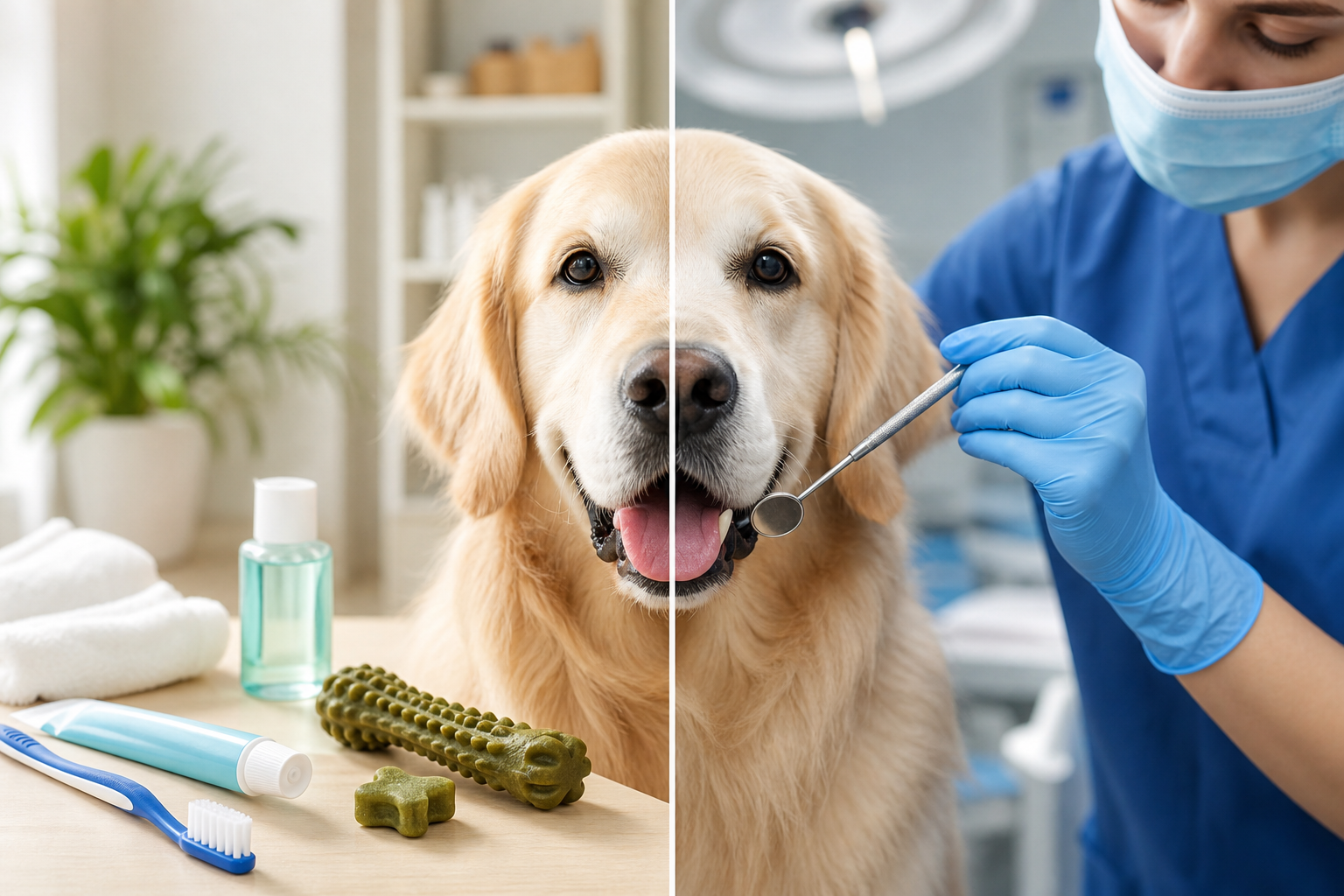
Tartar removal for dogs compared: at-home methods versus vet care
Quick verdict: what works and what does not
Daily plaque disruption at home is the most effective way to slow tartar formation. Brushing, enzymatic products, chews, and wipes reduce bacteria and mechanically loosen soft plaque, but none reliably remove hardened tartar. Only a professional veterinary dental cleaning can fully remove established tartar and treat disease under the gumline. Use at-home care as prevention and book veterinary cleaning when visible tartar, inflamed gums, or eating problems appear. For a veterinary overview of why professionals are required for full tartar removal, see this article from Dutch and this technician-style review from PetCareLab.
How we compared options and our selection criteria
This article compares categories rather than brands, using transparent criteria: effectiveness at disrupting plaque, ability to remove or prevent tartar, safety for dogs and owners, ease of daily use, and available veterinary or technician evidence. We do not rank brands. The categories that follow are ordered to help you decide between intensifying at-home routines and seeking professional care.
At-home tartar control options compared
This section compares toothbrushing and toothpaste, dental wipes, dental chews and toys, water additives and enzymatic rinses, and topical enzymatic gels. Each category lists realistic benefits, limits, and practical examples so you can build a daily routine that actually reduces plaque progression.
Toothbrushing and dog toothpaste
Why it helps: Brushing removes soft plaque before it mineralises into tartar. Daily or near-daily brushing gives the best measurable benefit among at-home options and is the single most effective home measure to slow tartar build-up.
How to do it safely: Use a toothpaste formulated for dogs and a soft brush or fingertip brush. Start slowly, plan very short sessions at first, and reward your dog after each attempt. Practical steps are: lift the lip gently, brush at a 45 degree angle to the gumline, spend a little time on the outer surfaces where plaque first forms, and aim to build sessions from 20–30 seconds per side to around 1–2 minutes total if your dog tolerates it.
What to expect: Brushing prevents new plaque and lowers bacterial load. It does not reliably remove hardened tartar already attached to the tooth surface. If you see yellow or brown hard deposits at the gumline, brushing helps stop further buildup but will not remove the mineralised deposit.
Dental wipes and pads
Why they help: Wipes are a practical alternative for dogs that resist a brush. They mechanically remove soft plaque and typically apply an enzymatic or antiseptic solution to reduce bacteria.
Practical notes: Use wipes daily for best effect. Wipes are quicker and easier to introduce than brushing, but they reach less surface area and are less effective on molars and inside surfaces. Expect modest plaque control rather than tartar removal. Use wipes as a bridge toward brushing, for travel, or for older dogs who cannot tolerate full brushing.
Dental chews and chew toys
Why they help: Textured chews and specially designed toys use mechanical abrasion to disrupt plaque on chewing surfaces. Some veterinary studies show particular chew formats reduce plaque accumulation when used regularly as part of a routine.
Safety and limits: Choose chews sized for your dog and follow calorie guidance, since chews add dietary calories. Avoid very hard chews such as cooked bones or antlers that can fracture teeth. Chews help prevent buildup but do not remove heavy, hardened tartar.
Water additives and enzymatic rinses
Why they help: Enzymatic additives and rinses lower the oral bacterial load that forms plaque. They are easy to use and work best when combined with brushing or chews.
Practical effect: Water additives provide modest benefit alone. They are a useful complement to mechanical measures but will not dissolve hardened tartar once it is formed. For practical at-home plans that emphasise daily plaque disruption, read the technician-style recommendations from PetCareLab.
Enzymatic gels and topical cleaners
Why they help: Topical gels can soften plaque and make it easier to remove by brushing or gentle wiping. Apply them according to product instructions, typically after cleaning or as an adjunct to brushing.
Limits and safety: Gels support plaque control rather than cure established tartar. Use only products formulated for dogs and follow dosing guidance. If your dog swallows a small amount it is usually safe, but check product labels and talk to your veterinarian if you are concerned.
Why manual or electric scalers are risky at home
Using metal picks, sharp instruments, or home ultrasonic scalers risks enamel damage, gum injury, pain, and infection. Professionals scale under controlled conditions and often with anaesthesia so they can clean above and below the gumline safely. Do not attempt home scaling; the potential for long-term dental harm is high.
Professional veterinary dental cleaning explained
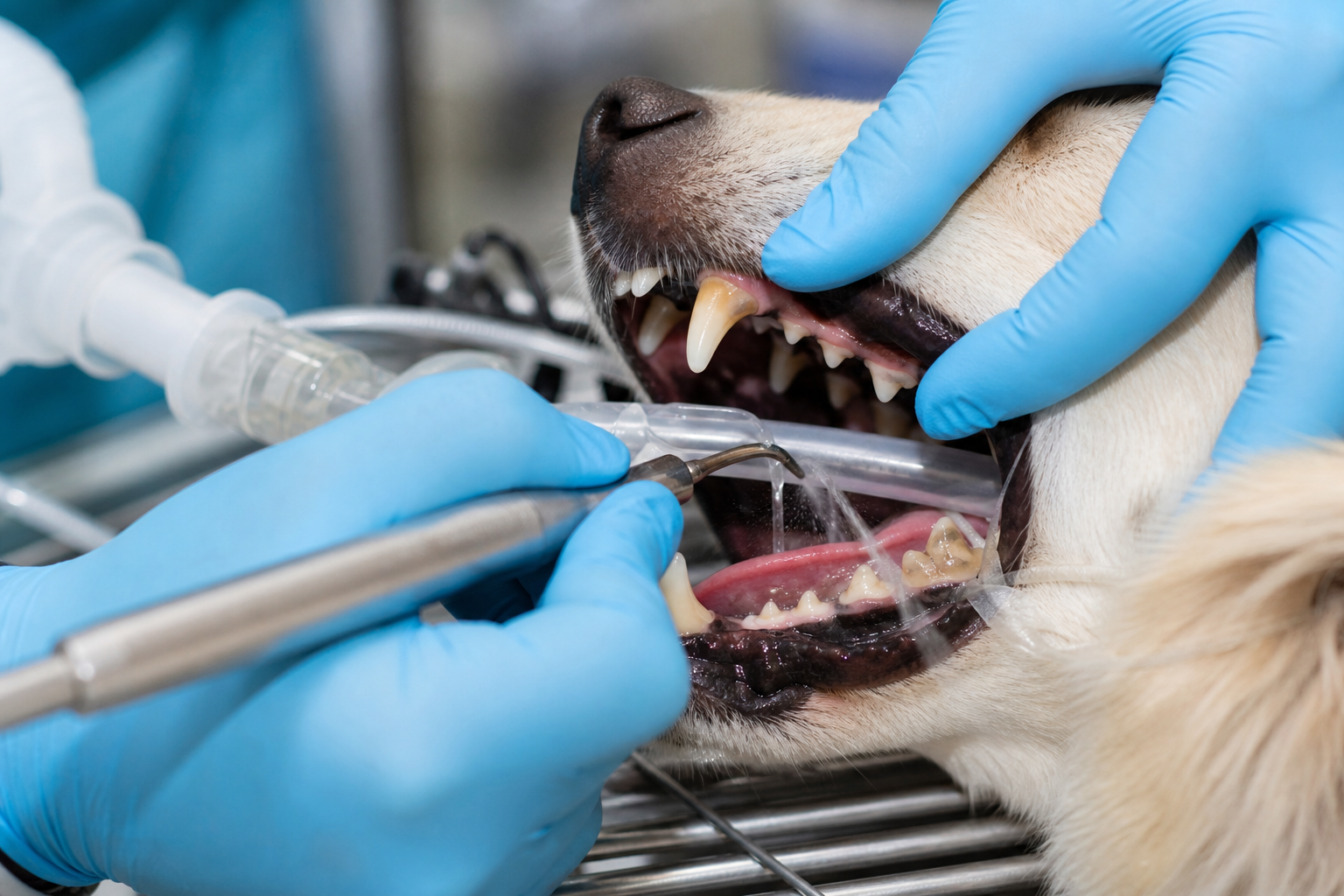
When tartar is visible or the gums are inflamed, a professional cleaning is the reliable way to remove mineralised deposits and properly assess oral health. Veterinary teams can access subgingival areas and treat disease that is not visible in a conscious exam. For an accessible overview of professional procedures and why anaesthesia is commonly used, see this veterinary article from Dutch.
What a professional cleaning involves
A typical professional dental cleaning includes a preoperative physical exam, diagnostics or bloodwork as the veterinarian recommends, anaesthesia to protect the airway and allow thorough cleaning, ultrasonic and hand scaling of supra- and subgingival deposits, polishing, dental charting, and extractions if needed. The team provides pain control and written aftercare instructions for the first days after the procedure.
Benefits, risks, and recovery
Benefits include complete removal of tartar, cleaning below the gumline, and reduced progression of periodontal disease. Risks are largely related to anaesthesia and the specific procedures performed. Many practices recommend pre-op bloodwork, especially for older dogs or animals with known health issues, to assess anaesthesia risk. Typical recovery includes mild lethargy for 24 hours, appetite returning within 24–48 hours, and a soft-food recommendation for 24–72 hours if extractions were performed. Your veterinarian will prescribe pain medication and follow-up as needed.
How often to schedule professional cleanings
Frequency depends on your dog's age, breed, mouth conformation, and how fast plaque accumulates. Some dogs need annual cleanings while others require more frequent care. Your veterinarian will recommend intervals based on oral exams and disease progression. Regular at-home care between visits slows progression and can lengthen the time between professional cleanings.
Decision checklist: which option to choose for your dog
- If tartar is minimal and your dog accepts handling: start or intensify daily brushing, add an appropriate veterinary-approved chew, and consider a water additive.
- If hard tartar is visible, gums are red or bleeding, or your dog has persistent bad breath or difficulty eating: book a veterinary dental exam and likely professional cleaning.
- If your dog will not tolerate brushing: use daily wipes and veterinary-approved chews, and arrange regular veterinary checks to monitor progression.
- Never use home scaling tools or human dental instruments, and never sedate your dog at home to perform dental work.
Red flags that require prompt veterinary attention include severe halitosis, drooling, visible pus, sudden reluctance to chew, oral bleeding, or facial swelling.
Safety warnings and techniques to avoid
Avoid attempts to remove hardened tartar with metal picks, ultrasonic devices, kitchen tools, or human dental instruments. Do not use human toothpaste, because it can contain ingredients toxic to dogs. Do not force a struggling dog into long dental sessions; instead work with a veterinarian or trainer to acclimatise the dog to handling.
How to buy products or book services at My Business in Italy

My Business sells a pet dental product called Pet Dental Care | Effective Tartar Removal with Gentle Cleaner and offers national shipping across Italy. For product questions, to purchase, or to ask about local veterinary partners, call +39 329 563 0900 or visit the store at Via Francesco Caracciolo 5, Fondi, Latina. Store hours are Monday to Friday, 09:00 to 17:00. You can also view product details and order online at the shop website.
Product pages list directions for use and safety notes. If your dog already has heavy tartar or signs of dental disease, call your veterinarian to book an exam; store staff can advise on at-home products but cannot perform professional dental cleanings.
Quick next steps and concise call to action
Start a daily plaque-disruption routine if your dog has mainly light plaque: brush or wipe daily, add a vet-approved chew, and consider a water additive. If you see hard tartar, inflamed gums, bad breath, or eating difficulties, call for a veterinary assessment right away. For product purchases or questions about the gentle tartar cleaner, contact My Business by phone or visit the online shop at the official website.
Frequently Asked Questions
Can I remove tartar from my dog's teeth at home
You can remove soft plaque at home with brushing, wipes, chews, and enzymatic products, but you cannot reliably remove hardened tartar. Only a professional veterinary cleaning can fully remove established tartar and address disease under the gumline. For more detail, see this veterinary overview from Dutch.
How often should a dog have a professional dental cleaning
Frequency varies by dog. Many dogs benefit from an annual or twice-yearly exam and cleaning when recommended by a veterinarian. Your vet will tailor the interval based on your dog's oral health and risk factors.
Are dental chews and water additives effective for tartar control
Chews and additives help reduce plaque accumulation and lower bacterial load, which supports prevention. They are effective as part of a daily routine but are not a substitute for brushing or professional cleaning when tartar is already present. Technician-style reviews summarise practical at-home plans and show how these products fit into a routine.
Is non-anaesthetic dental cleaning safe for my dog
Non-anaesthetic cleaning may remove visible plaque from crowns but cannot reliably clean below the gumline where periodontal disease develops. Safety varies with the dog and the procedure. Discuss options and risks with your veterinarian to determine the safest choice for your pet.
What signs mean my dog needs a veterinary dental cleaning now
Seek veterinary care if you notice heavy brown tartar, red or bleeding gums, persistent bad breath, pain when eating, drooling, facial swelling, or any oral discharge. These signs suggest disease that requires professional evaluation and likely cleaning.
Further reading and technician-style tips are available from PetCareLab and a veterinary overview from Dutch.